
A New Documentary Reexamines the True Story Behind the Ramona Pageant
“My family, we’ve been quiet,” she says. “We’ve never really shared our pain with anyone. None of us have attended The Ramona Pageant … out of respect and honoring my great-grandmother and my grandfather, their pain, and that generational trauma.”
As the Sklavers dug into the history behind the novel and the play, Ramona’s story struck them as an example of the many ways settlers displaced, silenced, and brutalized Native tribes.
“The story of Ramona is really the story of California, and Southern California in particular,” Jason says. “It is the embodiment of everything that happened around the time that California became a state.”
What surprised them most was how thoroughly the factual account had been obscured. “When the phenomenon of the novel and the play started, it was all about this fictional story,” Tawney says. “It’s never really been told — the real history and the real story.”
Their research grew into a yearslong effort. They made repeated trips from Los Angeles to the desert, hiked through the surrounding mountains to pinpoint where Diego was killed, pored through archival recordings and documents, and consulted with representatives from the Autry Museum and other regional organizations to sort through the historical record. The Sklavers also collaborated closely with the Cahuilla Band of Indians and the Soboba Band of Luiseño Indians.
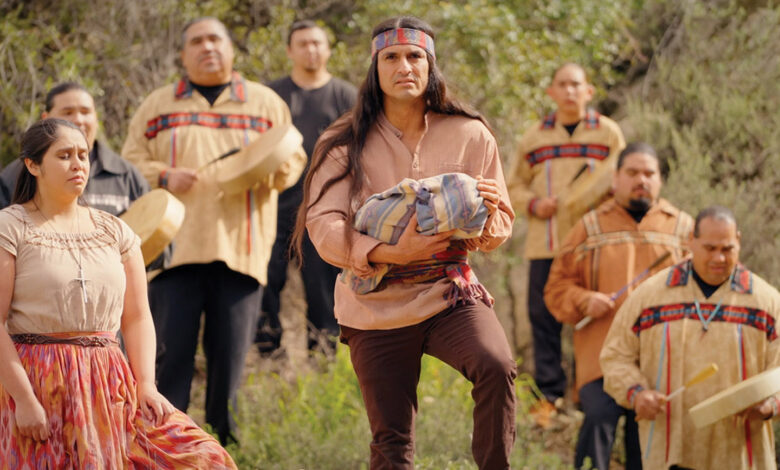
One of their key partners was the late Steve Alvarez, who played a prominent role in Ramona as leader of the Red Tail Spirit Singers and Dancers, the group that performs tribal dances during the production.
“Steve was instrumental in connecting us with members of the Cahuilla,” Jason says.
The film also follows a personal thread: actor Eli Santana’s search for his own Native American ancestry. Santana, who performs in a punk band in addition to portraying Alessandro in Ramona, says he knew little of his heritage before joining the cast. Through research and genetic testing, he traced his origins to the Yaqui tribe. “It gave me purpose in life and an identity that I’m proud of,” he says. “It really felt like it tethered me and grounded me into something bigger than myself.”
For Alice Holmes — the great-granddaughter of Ramona Lubo — the documentary opened a door to healing. She says it took years to feel settled about the past, but the film offered a chance to honor and share her great-grandmother’s story in full.
“I’m grateful for the opportunity to represent our family … and to share that she was real,” Holmes says. “She was a real person.”
Source link